The Tikkun Project
About this unit
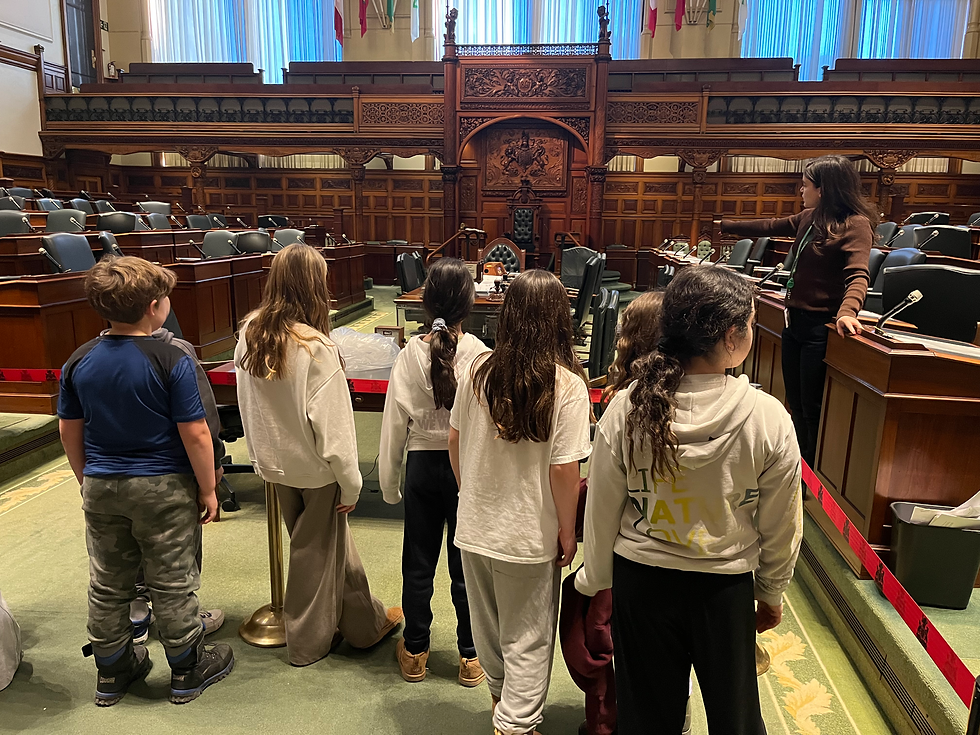
In this unit, students will learn about their rights and responsibilities as citizens in a democratic society. In most jurisdictions, it is a common responsibility of many government officials to meet with students. Establishing a relationship with an elected official can help students understand better how the government operates, including how laws are created and changed and learn about the different roles and responsibilities of elected officials. By collaborating with a government official, students can apply their learning to engage with an authentic local challenge. The Critical Challenge presents an opportunity for students to explore the meaning of Rabbi Hillel's call to action, "Im Ayn Ani Li Mi Li" (If I am not for myself, who will be for me?), as they formulate an action plan to address an important social issue. By practicing civic engagement strategies and engaging in dialogue with elected officials, students can voice their concerns and feel empowered to become active citizens now and in the future.
critical challenge
Students will create and implement an effective action plan to engage with the legislative system to resolve an important issue of injustice in the community.
critical challenge Criteria
- • The action plan demonstrates a good understanding of the roles and responsibilities of
• individuals and of the different levels of government
• The action plan is feasible for students to implement, or it involves productive collaboration
• with the appropriate people in positions to take action
• The impacts of the action can be measured
Unit Goals
Curriculum Connections
- How are just laws made and how are they changed over time?
This line of inquiry has students examine the process by which laws are created and amended, building the civic-structure knowledge needed to recognize when and how change is actually possible within a legislative system.
What are the responsibilities of each level of government, and what does it mean to live in a responsible representative democracy?
This line of inquiry builds students' understanding of the roles and responsibilities of each level of government, and introduces the key terms — head of government, head of state, prime minister, president, parliament, senate, governor general — that let students compare and contrast different
government systems rather than treating "government" as a single undifferentiated idea.
What responsibility do individuals have to advocate for change, and what tools are available to them — both as future voters and as students today?
This line of inquiry covers voting, petitions, and other avenues for advocacy, and draws on real examples of youth civic action (including Millennium Kids Canada) to show students that meaningful engagement with government is available to them now, not only once they're old enough to vote.
Is majority-rule democracy always the best way to make decisions, and is Canada's current system the ideal version of it?
This line of inquiry has students consider alternative decision-making structures (including consensus-based governance) and compare multiple systems of government — Indigenous systems of governance, the US presidential system, the ancient Sanhedrin, and the Israeli parliamentary system among them — before evaluating Canada's own electoral system (first-past-the-post vs. ranked ballot) against real alternatives, rather than assuming it's the only or obviously-best option.